
Emerging sponsorship assets, new commercial categories, and the changing economics of collegiate athletics.
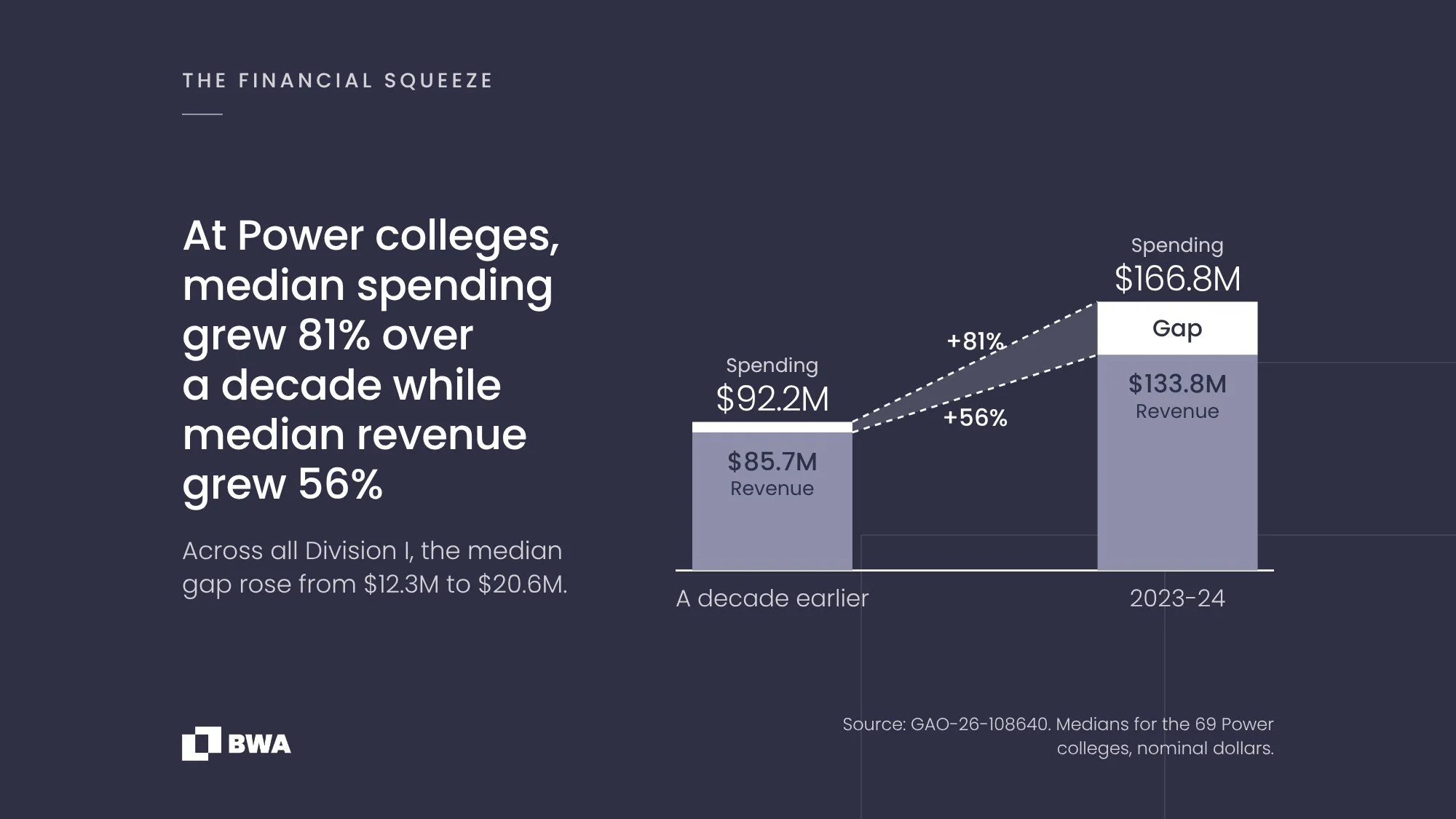
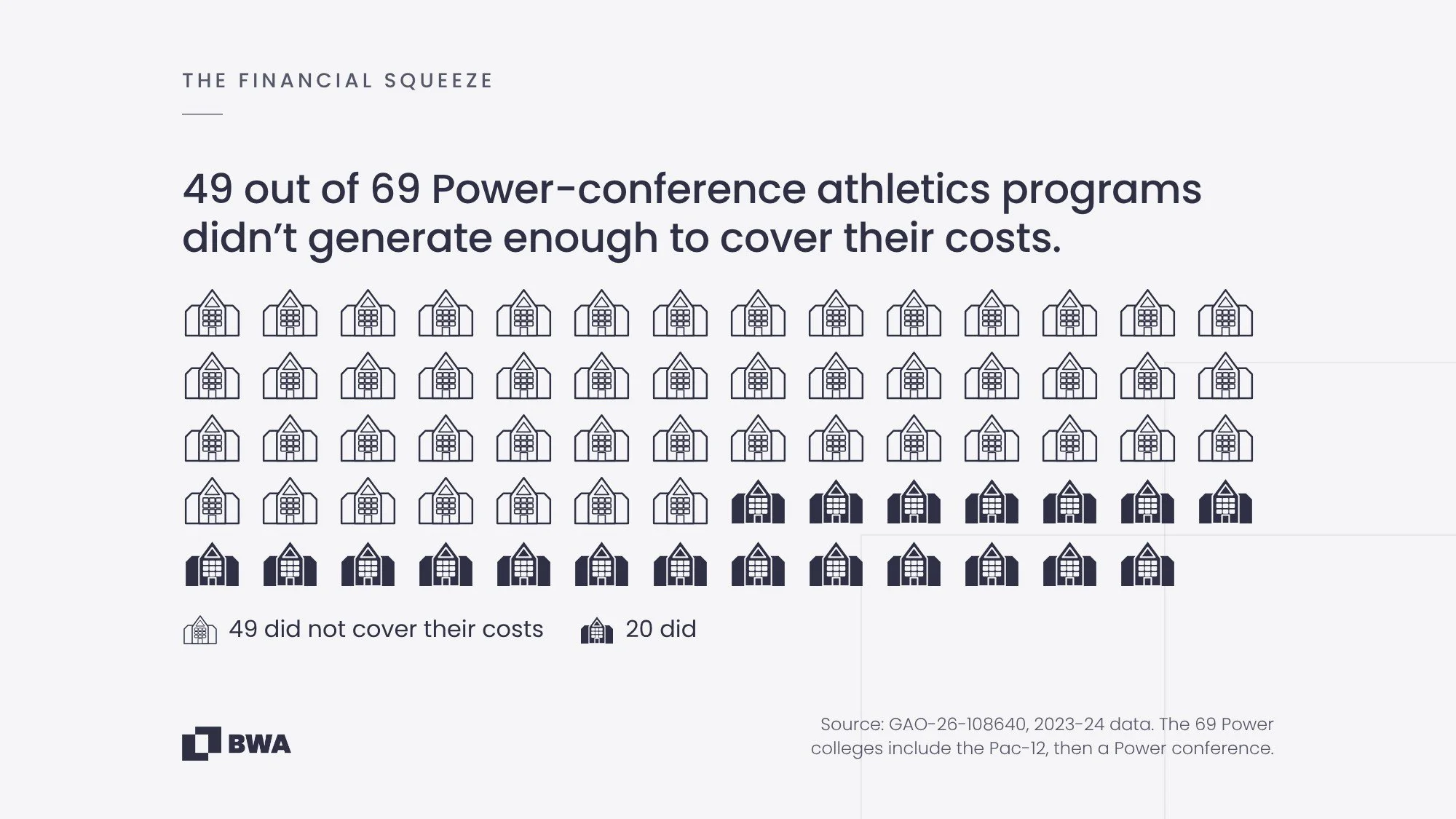
Every athletic director and university CFO already knows the financial position is difficult. That is not the interesting part.
The interesting part is what has happened on the other side of the ledger. Over the same period that financial pressures intensified, the commercial opportunities available to universities expanded dramatically, creating new revenue streams that many institutions have yet to fully identify or monetize. A great deal of that value is sitting unrecognized, unpriced, or already captured under agreements written before any of it existed.
The question is not whether institutions need revenue. It is whether they know what they own.
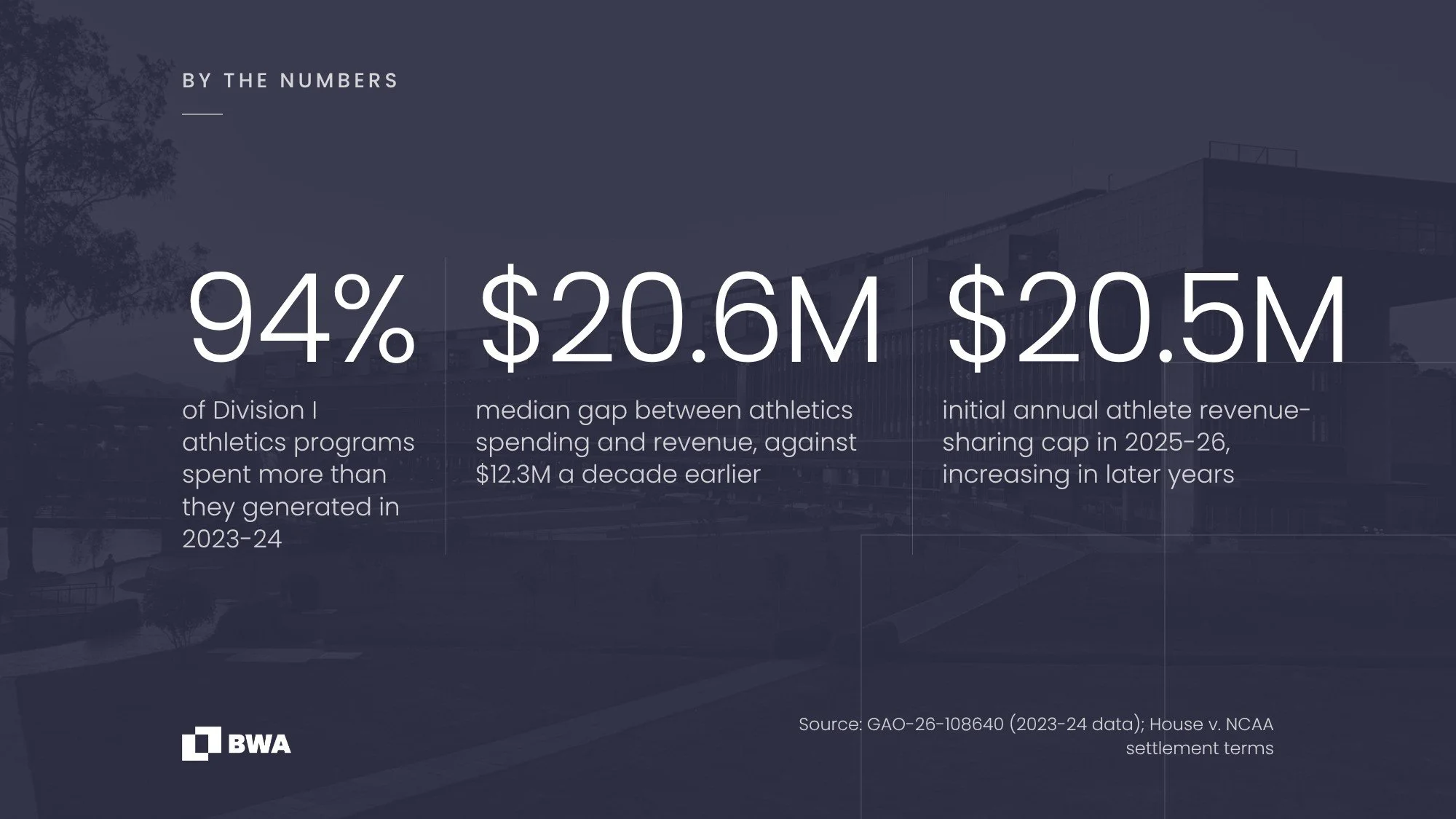
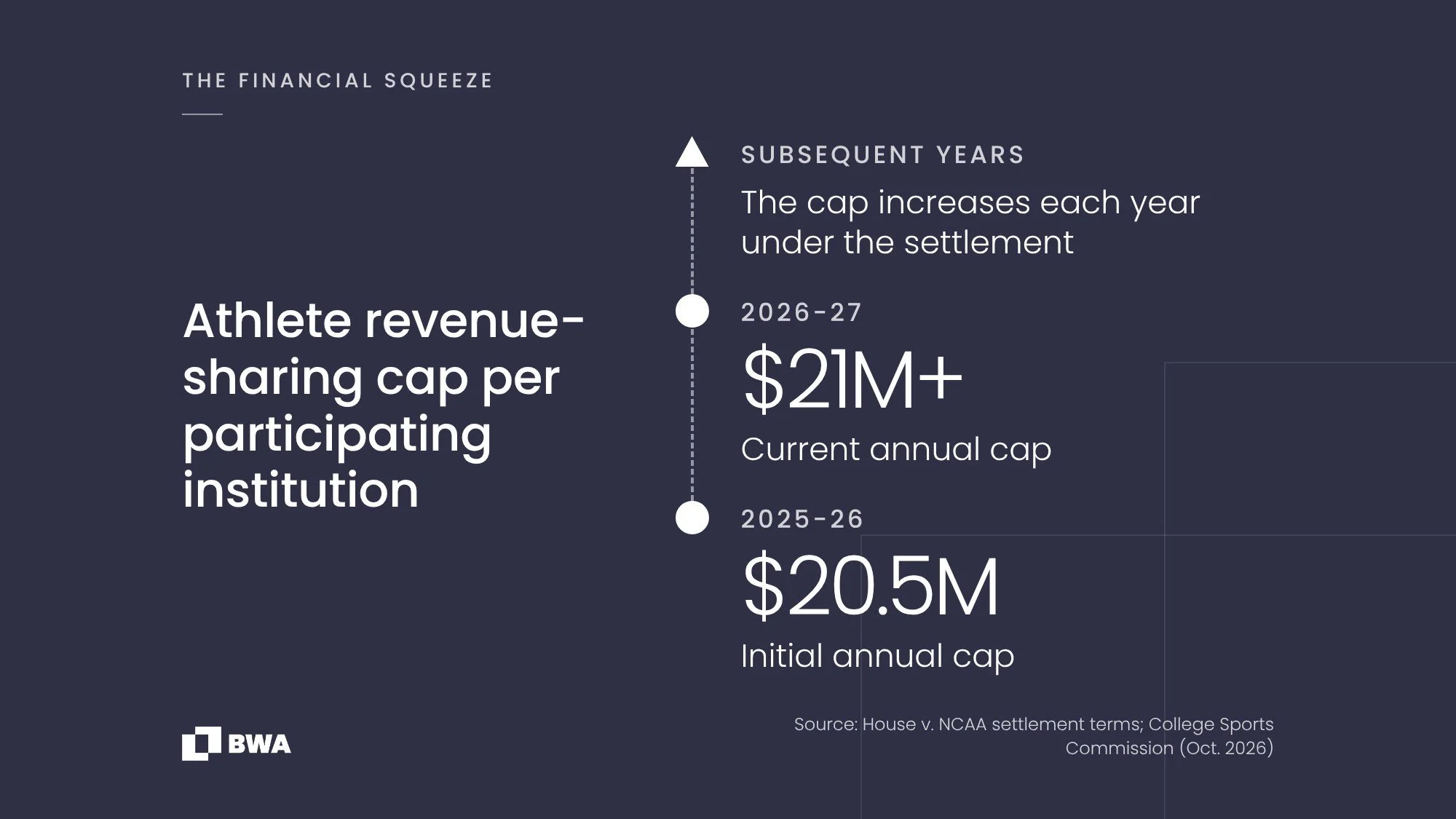
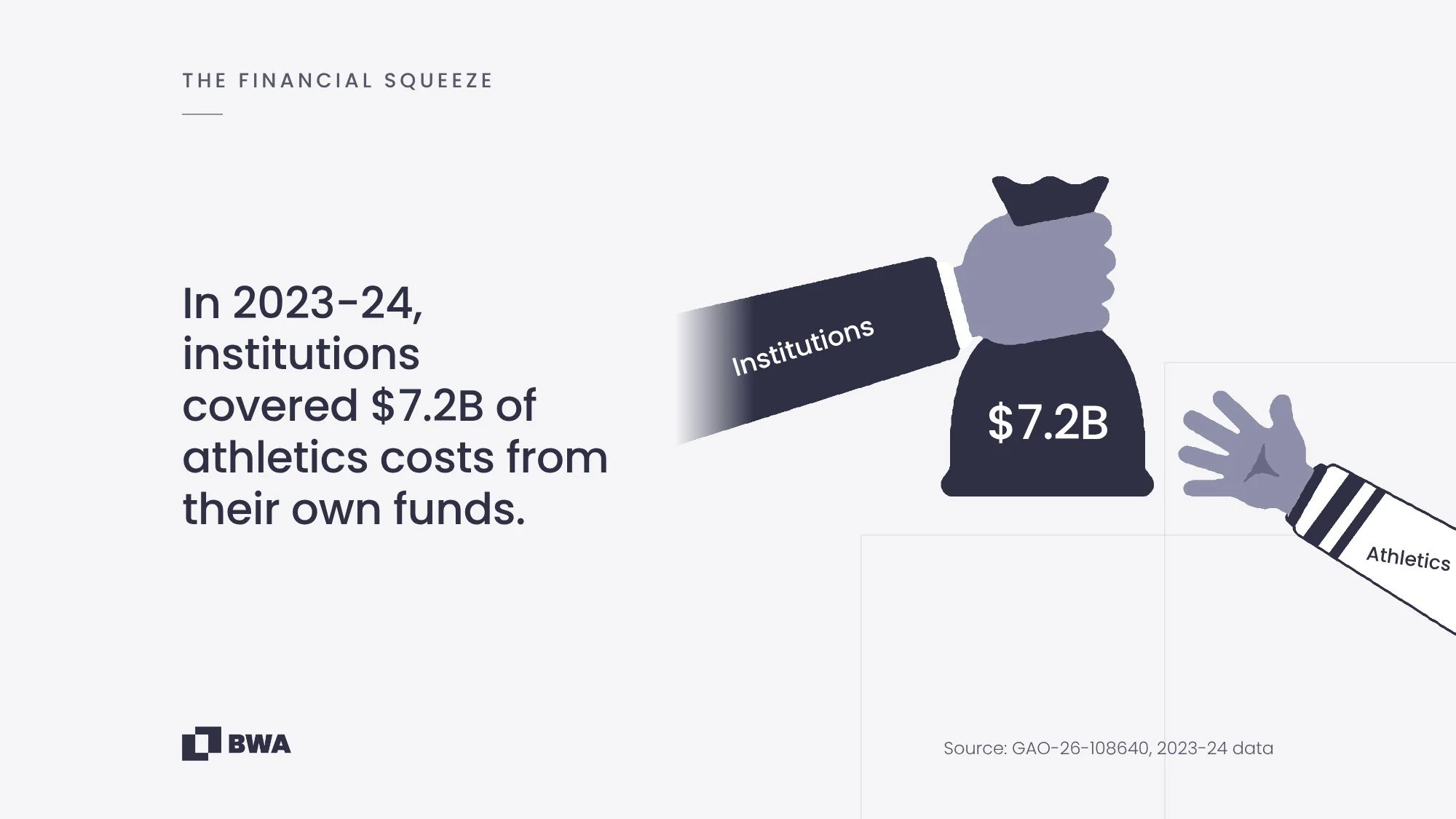
Institutions covered $7.2 billion of athletics costs from their own funds in 2023-24. On the academic side, state appropriations rose 1.0 percent in nominal terms in fiscal 2026, below inflation, with seventeen states and the District of Columbia reducing support. In March 2026 Fitch suggested institutions consider monetizing non-core assets to support financial sustainability.
When a ratings agency advises a sector to monetize what it already owns, the commercial question has already been settled. What remains is an inventory question.
1. The sponsorship landscape has fundamentally changed
Four major developments have fundamentally reshaped the collegiate sponsorship marketplace, creating new commercial opportunities and changing how existing assets are valued.
Commercial logos on uniforms, apparel and equipment: A new asset class with finite, physically limited positions. Unlike signage, these cannot be expanded to accommodate a second buyer, which changes how they price.
Direct athlete compensation: Athlete-facing rights that can be contracted alongside institutional assets, together with a compliance perimeter that now reaches the rights holder and the sponsor, not only the school.
Conference realignment: New media markets, new peer sets for benchmarking, and a conference inventory layer that has to be reconciled against existing grants.
Commercialization of the wider campus: Named academic facilities, student life programming, recreation, esports and innovation platforms, sold to buyers who want the university rather than the athletics department.
Agreements signed before 2024 could not have contemplated the first two, and many remain in force. They are not deficient. They describe a market that has since moved.
The shape of the opportunity has changed
Athletics signage, broadcast and game day promotions, sold as a package by a rights holder against a defined venue footprint.
Uniform and equipment positions, athlete-facing platforms, standalone women's properties, and year-round fan systems that extend beyond the game calendar.
A single integrated position spanning athletics and the wider university, bought by categories that are acquiring customers and talent rather than impressions.
Most institutions are still selling the first column. The buyers with the largest budgets are increasingly asking for the third.
2. Universities are sitting on assets they may not realize have commercial value
This is rarely a question of neglect. It is a question of definition. Four areas account for the majority of what we find.
Uniform and equipment: Rarely appears on inventory lists assembled before the rule change. The unit of sale, whether department-wide, by gender or by individual sport, materially changes total value, and it is often not a deliberate decision.
Women's athletics: Department-wide women's properties have moved from effectively nothing to a recognized asset class, with buyers who will not fund a general athletics package. Many institutions still price these programs as part of a bundle.
Athlete-driven partnerships: Roster-wide ambassador and appearance rights, content platforms and athlete development programs are now being contracted inside institutional agreements. Few inventory lists define them, and fewer agreements allocate the associated compliance risk.
Campus-wide assets: Academic facilities, first-year student programming, recreation and innovation platforms. These rarely sit with athletics, are rarely inventoried anywhere, and are increasingly what the most valuable buyers actually want.
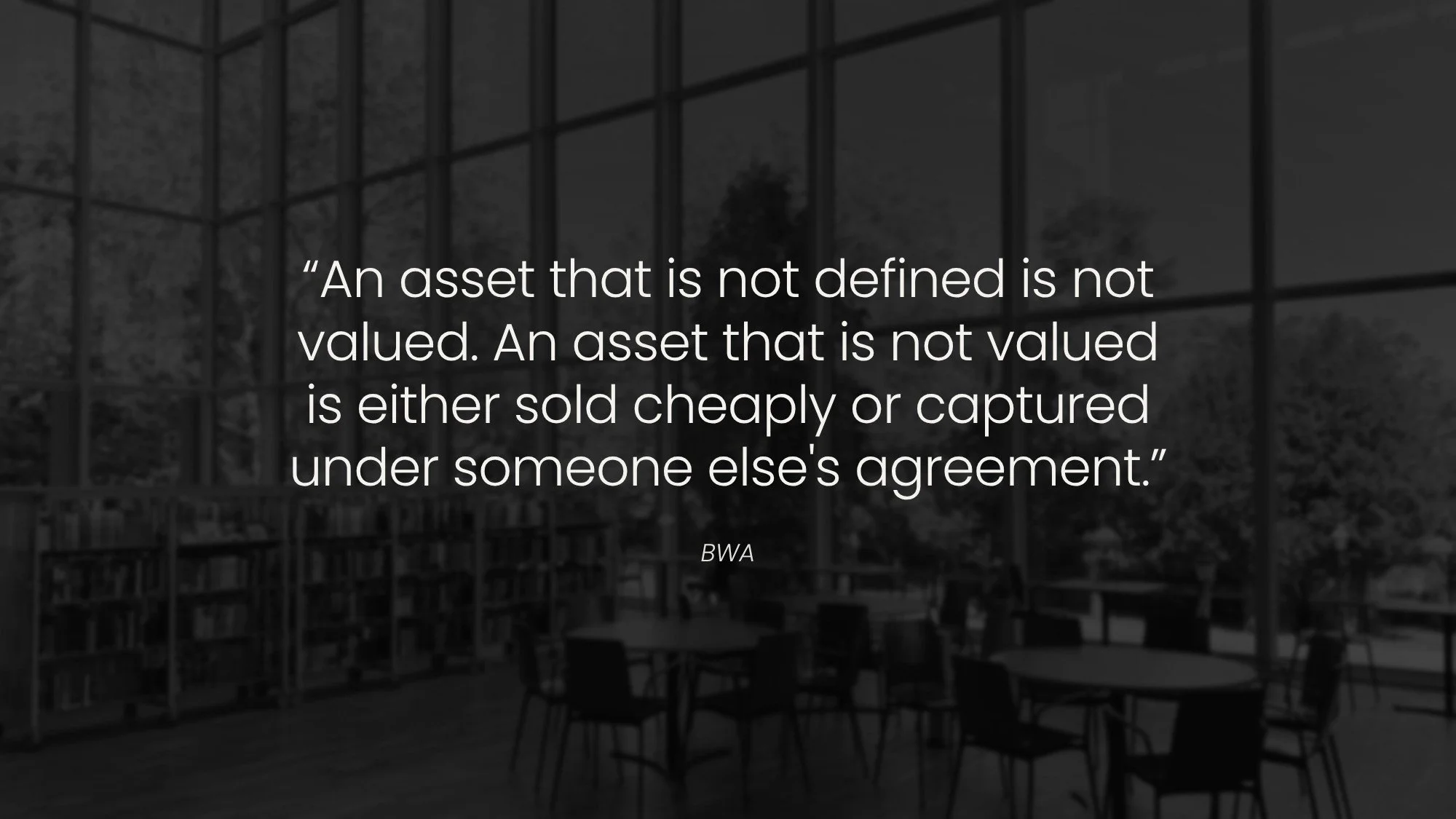
An asset that is not defined is not valued. An asset that is not valued is either sold cheaply or captured under someone else's agreement. The loss is rarely visible until renewal, by which point it is a decade old.
3. The next generation of sponsors is looking beyond signage
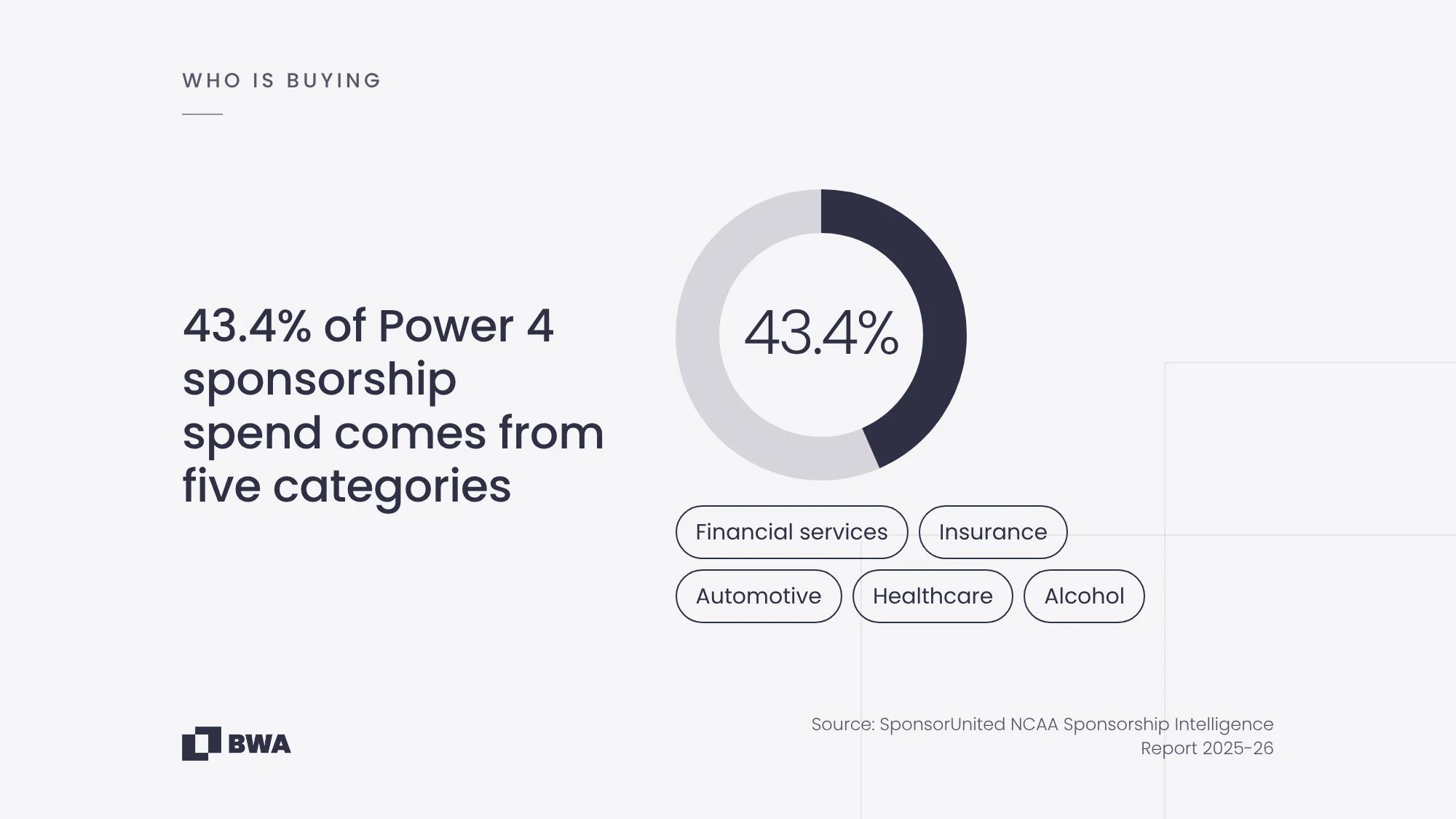
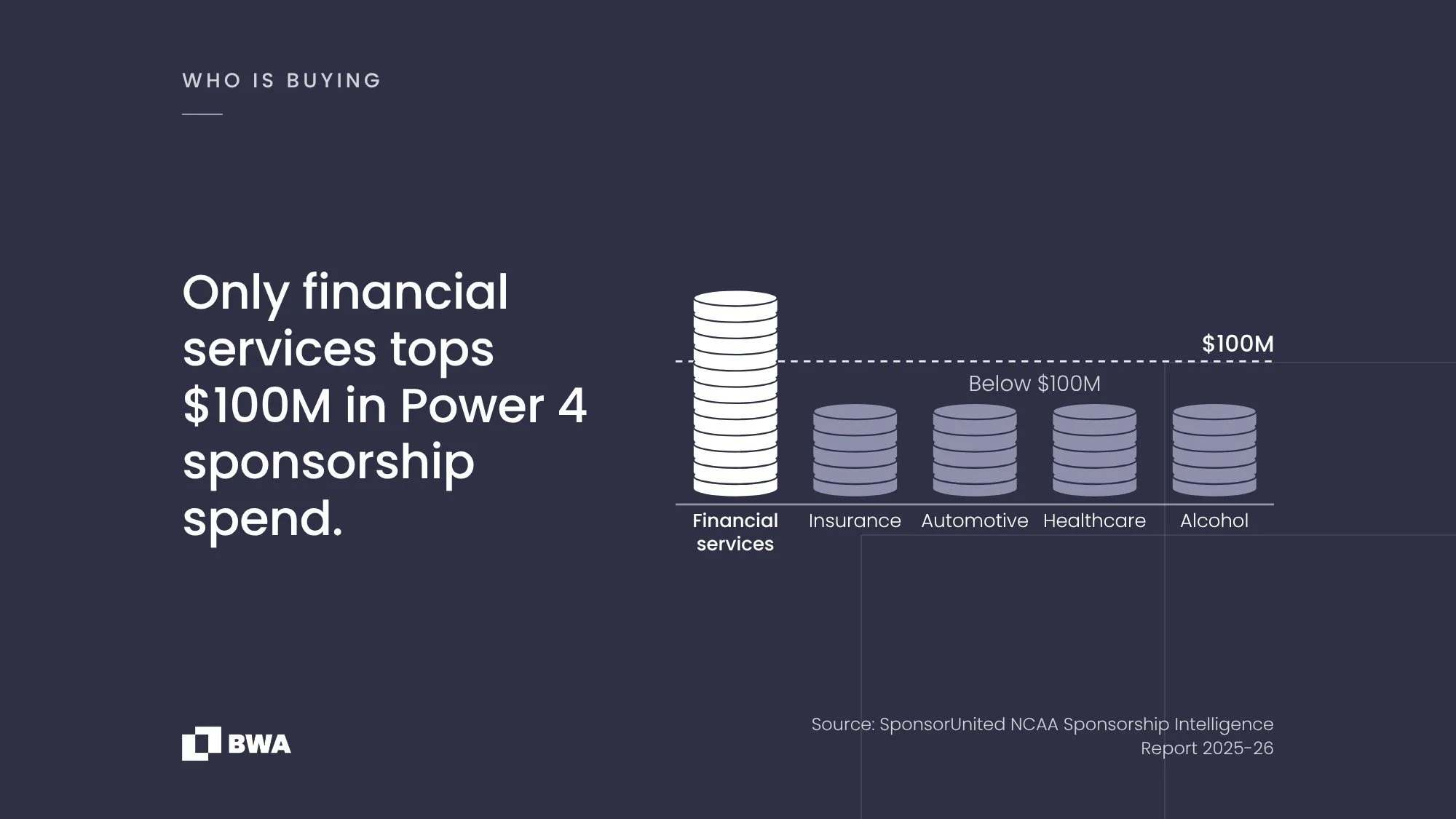
The buyer set has changed as much as the inventory. Signage still accounts for the majority of college sponsorship spend, but the categories writing the largest checks are not buying signage as their primary objective. Financial services, insurance, automotive, healthcare and alcohol together account for 43.4 percent of Power 4 sponsorship spend, and financial services is the only category exceeding $100 million.
What they are actually buying:
Financial institutions: Integrated positions spanning athletics and the wider campus: official designations, physical presence, student financial education and named academic facilities. They are acquiring customers, not impressions.
Healthcare systems: Naming paired with exclusive provider status, frequently split between two complementary brands. The objective is regional market share in a competitive service area.
Technology and data: Founding partner positions in academic and athletics technology platforms, with infrastructure, branding and graduate talent access bundled together.
Energy, insurance and regional operators: Category positions that national brands have historically overlooked, often at sport level or tied to scholarship and workforce programs.
These buyers are not evaluating a signage package. They are evaluating whether an institution can deliver an integrated position across athletics and campus. Many cannot, because the two halves sit under different agreements and are sold by different people.
4. Exclusivity may be costing institutions more than they realize
This is the issue most consistently underestimated, and the one carrying the largest financial consequence.
Exclusivity granted several years ago was written against a market with fewer buyers and broader category definitions. Most major categories have since fragmented. A grant that was reasonable when it was made may now foreclose several buyers at once, for the remaining term, at no additional consideration to the institution.
Three further dimensions compound it, each worth checking against your own agreements.
Assets that do not yet exist. Commercial agreements commonly contain language governing rights that arise during the term. It is frequently among the least negotiated clauses in the document and among the most consequential, because it determines who owns the next category of asset before anyone knows what it is.
Where athletics stops and the university begins. Exclusivity granted in an athletics agreement can constrain what the university itself is able to do elsewhere on campus, including in its own naming and donor programs.
The athlete dimension. Whether a category grant extends to athlete-facing activity is frequently unaddressed, and it is now the area carrying the clearest regulatory consequence.
Is Your University Capturing the Full Commercial Value of Its Assets?
The collegiate sponsorship marketplace has changed. Has your institution's commercial strategy kept pace?
BWA works with universities to identify, value, and monetize commercial opportunities across athletics and campus.
Contact our team to discuss what an independent assessment could reveal.